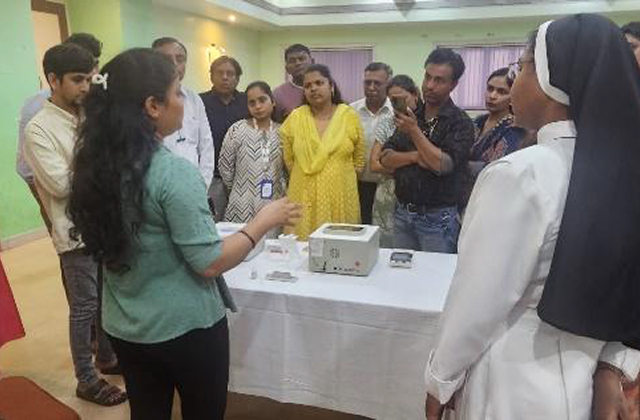
Participant Demographics and Community Representation
A diverse cohort of participants, consisting primarily of community activists, treatment advocates and leaders from Non-Governmental Organisations (NGOs) across the Western Region, attended the Training of Trainers (ToT) workshop. The attendees were strategically selected for their direct engagement with marginalised and key populations, including people living with HIV (PLHIV), people affected by Tuberculosis (TB), high-risk groups and residents of rural and semi-urban areas where access to healthcare is limited. Their participation ensured that the workshop discussions were grounded in genuine on-the-ground challenges faced by the most vulnerable communities in accessing TB and HIV diagnostics.
Workshop Background and Objectives
The Regional Training of Trainers (TOT) Workshop for the Western Region was proposed
by Sankalp Rehabilitation Trust as a crucial follow-up to the National TOT held in New
Delhi on July 3rd–4th, 2025. The national workshop had set the stage by focusing on
enhancing community leadership in advocating for equitable access to advanced molecular
Point of Care (POC) diagnostics for TB, HIV, HCVand related infections. This regional
initiative was designed to localize that national agenda for the Western states (Maharashtra,
Gujarat, Madhya Pradeshand Goa).
The rationale for the regional workshop stems from the barriers to timely diagnosis and
treatment faced by communities in this region. Specifically, marginalized and high-risk
groups, including People Who Inject Drugs (PWIDs), Female Sex Workers and
Transgenders, often lack accessible and reliable diagnostic tools. These barriers result in
delayed diagnosis and poorer treatment outcomes, particularly concerning TB, HIVand their
co-infections. Therefore, the workshop was necessary to strengthen the capacity and voices of
community leaders from these affected groups to effectively advocate for improved
diagnostic access and hold the public health system accountable for the scale-up and
inclusion of POC diagnostics within primary health systems.
Objectives of the Workshop:
Overall,For the first time, the workshop brought together TB, HIV, and Hepatitis C leaders to share experiences and enhance their understanding of molecular POC diagnostics and advocacy strategies. This collective effort laid a strong foundation for equitable access to essential health services.