Background and Program Context
India's national response to HIV and tuberculosis (TB), led by the National AIDS Control Programme (NACP) and the National TB Elimination Programme (NTEP), has achieved substantial gains in treatment coverage, mortality reduction, and service expansion. However, persistent challenges remain in early diagnosis, decentralised testing, integration of HIV–TB services, and continuity of care, particularly for people living with HIV (PLHIV), key populations, and communities in hard-to-reach and high-burden districts.
Delayed diagnosis continues to contribute to late treatment initiation, preventable morbidity, ongoing transmission, and suboptimal outcomes under both programmes. Evidence from programmatic and community settings indicates that reliance on centralised laboratory-based testing alone is insufficient to meet national and global targets, including the 95–95–95 HIV targets and India's commitment to TB elimination by 2025.
Molecular point-of-care (POC) diagnostics represent a critical programmatic opportunity to strengthen early case detection, enable same-day clinical decision-making, and reduce loss to follow-up across the HIV and TB care cascades. Despite the inclusion of molecular diagnostics within national guidelines, access and operationalisation remain uneven across states and districts.
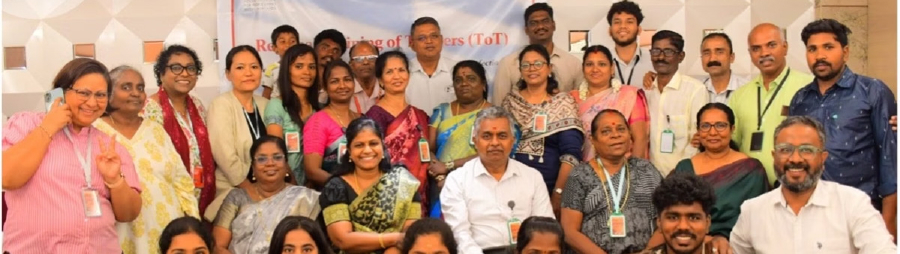
The Southern Region Training of Trainers (ToT) was organised to strengthen technical understanding, advocacy capacity, and regional action planning among community leaders and civil society actors, enabling them to effectively engage with NACO, State AIDS Control Societies (SACS), NTEP structures, and district health authorities to advance equitable access to molecular POC diagnostics.
Overall,For the first time, the workshop brought together TB, HIV, and Hepatitis C leaders to share experiences and enhance their understanding of molecular POC diagnostics and advocacy strategies. This collective effort laid a strong foundation for equitable access to essential health services.